For future generations, a shift from a linear to a circular economy is essential, with the preservation of valuable raw materials at its core. A key principle here is keeping materials and products in use for as long as possible. Aluminum plays a crucial role in this: it can be recycled again and again without any loss of quality, using only 5 percent of the energy required for the production of primary aluminum. This preserves valuable raw materials and significantly reduces the need for the extraction of primary materials.
Closing the Loop System
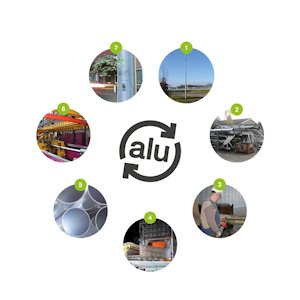
To maximize the reusability of products and raw materials, gain insight into material flows, and unburden customers, Hydro developed the 'Closing the Loop' system (formerly known as the Take Back system). Customers can opt into the system for a replacement project. Hydro takes back the decommissioned (aluminum) lighting poles upon delivery of new poles. These are then stripped, after which the materials are fully returned to the technical cycle.
Material Reuse Under One Roof
The aluminum from the pole is melted down into billets in a Hydro recycling unit. Subsequently, the billets are processed into aluminum tubes at the Extrusion department, from which Pole Products manufactures new lighting poles. The remaining material streams are processed by a certified waste specialist.
Design for a Circular Economy
When designing products within the concept of the circular economy, striving for a longer lifespan and considering reuse, repair, and recycling are important focus points.
Circularity can be integrated into product designs in various ways, with 'Design for Disassembly' being a key example. We develop our poles so they can be fully recycled at the end of their lifespan. Designing solutions using Design for Disassembly simplifies the dismantling of our lighting poles and helps customers with their circular policy.
How the Closing the Loop System Works
Hydro discusses with you the current material flows, the scrap inventory (including annual volume, material composition, the de-assembly process, dimensions, etc.), your wishes and needs, the pre-calculation of your revenue, and the project planning.
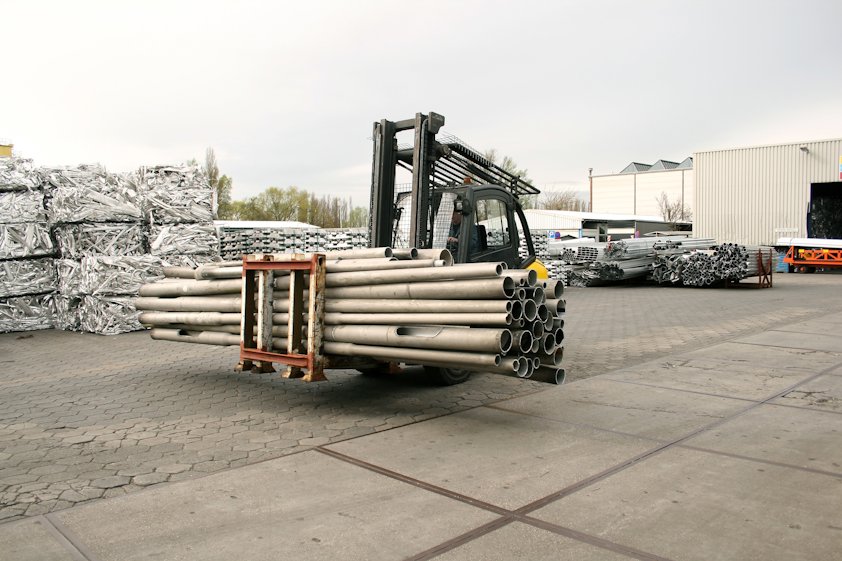
Hydro or one of our circular partners handles the collection of the scrap in consultation with you. Depending on the situation, this can be done by placing containers, directly collecting materials, or through customized collection agreements. In doing so, we take practical and cost-efficient solutions into account. Where possible, we combine return transport with deliveries of new materials. This reduces transport movements and contributes to a lower environmental impact.
We will settle the yield from the scrap with you, after deducting incurred costs.
Hydro processes (and disassembles if necessary) the products in cooperation with a circular partner. Hydro melts the aluminum in its own recycling units and makes new products from it. Material streams that Hydro cannot process are brought back into the loop by a supply chain partner.
You will receive a certificate that you can use for marketing purposes with your customers. We are also happy to collaborate with you to highlight the closing of the loop to the market.
Updated: 4 August 2026